Meme Images
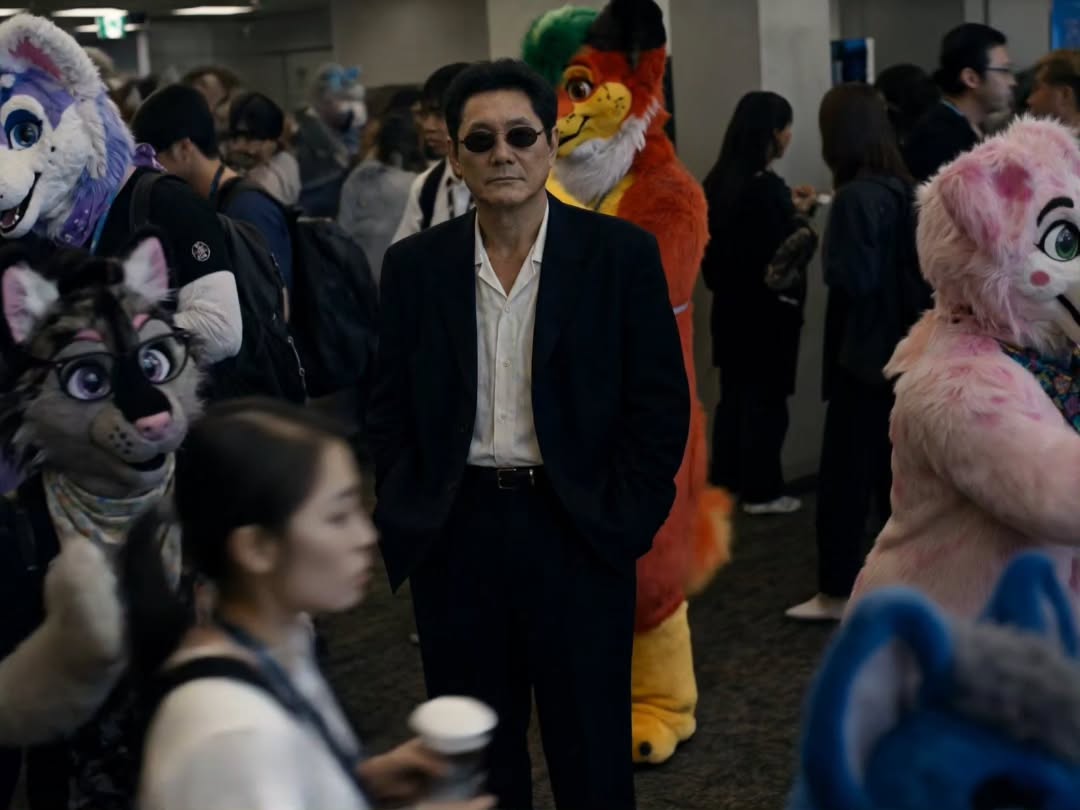
Jenson Leonard, Fur-ri, 2026
Fur-ri by Jenson Leonard is one of a number of videos included in the show Bed Bath & Body Works at Current Space. One of a cycling series of AI generated videos by the artist, it has brought more attention to the show than any other work due to its depiction of Anthrocon, hallucinating a Pittsburgh crawling with unreal furries, some based on identifiable suits, some amorphous approximations of Western fursuits--Spirit Halloween heads. Leonard’s images are obviously generated, aesthetically overwrought and grotesquely uncanny in a way that is familiar to anyone online today, slop-y. These and Leonard’s older meme works (and straight memes--the line between his digital footprint as a portfolio and as a genuine but unsuccessful meme account are blurry the farther you go back) are haphazard mashups of popular and “internet” culture, often touching upon symbols of Black American identity but with a nonchalant absurdity more in line with Jon Rafman and associated nihilistic “post-internet” artists.
From the Instagram portfolio/alias/art project coryintheabyss: July 20, 2016, Maya Angelou’s I Know Why the Caged Bird Memes. October 9, 2019, Tony Hawk’s Pro-Black Militia. December 6, 2016, Thanks Dronebama. December 28, 2015, the World Trade Center collapsing, ok we get it you vape. August 7, 2016, Disney’s 102 Unarmed Black People Were Murdered by the Police Last Year. November 5, 2018, This Page Runs On Feces-Hubris. The 2015 post of Doreen Garner’s Swoop Band also belongs to Leonard just as much as any other meme, artwork, provocation, flyer, or advertisement on coryintheabyss. I want to contextualize that Leonard is clearly an astute observer of how culture flows and obliterates online. Speaking with The Creative Independent in 2023, the artist makes it clear that he is a child of the internet, that to him memes are a “clearly avant garde aesthetic practice”.
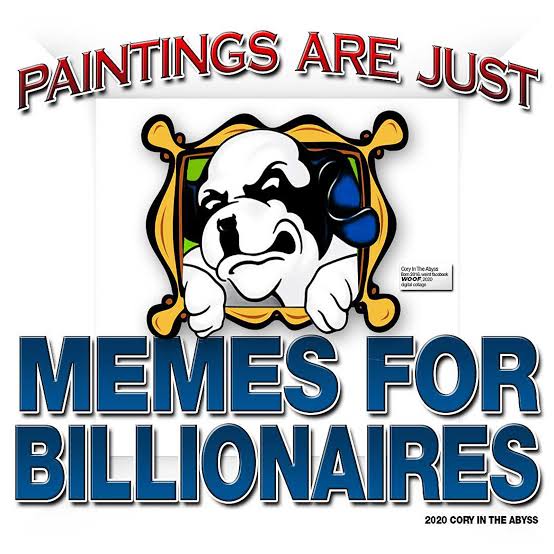
February 3, 2020 post by coryintheabyss
Perhaps the whole genre of “internet culture” analysis is destined to garner these kinds of reactions from the communities it allegedly portrays. Perhaps there is an inherent condescension in labelling “internet culture” today. In the year 2026, long post Arab Spring, post January 6, post looksmaxxing and Proud Boys becoming mainstream cultural forces, post Elon Musk, there is no reason to question the relevance of culture on the internet to global social and political structures. As our lives and the way we live have become inseparable from the internet, to identify “internet culture” as opposed to culture is little more than to reproduce a freakshow context, magnifying anything with sufficient aesthetic strangeness as an exotic product, much like the use of “outsider art”. In spite of the way Leonard describes his work as coming from within a background of internet culture, the work, especially the generative art, reads more like a zoo exhibit about strange and degenerate hobbies to be laughed at in the most intellectual way, "anthropologically". Only from late 2025 on have furry and pup images appeared in the work alongside images of Benjamin Netanyahu and Madea. While coryintheabyss memes have always used provocative poltical and cultural symbols, the self referential aesthetic of memes resulted in images much more aware of their nihilism and viewing the culture these memes originate from and disperse through with irony. The generated works do not feel so self aware, and highlight the posiiton of the artist much more poignantly; the self destructive and often meanspirited attitude of meme culture online is no longer the subject but the tool of the artist to genuinely disparage subjects, furry, kink (May 9, 2026), ballroom (December 25, 2025), etc.
Made by possibly the most well known amateur internet anthropologist, Jon Rafman’s spectacular gross-out video collage Still Life: Betamale is a distillation of the condescension rippling through coryintheabyss. In a slideshow of amateur fetish content, cub porn, insect hentai, and gravely depressed desktops, the implication of these images together as a statement about culture falls apart as the viewer is hit over the head repeatedly with the sharpest and most disquieting images possible, set to a gorgeous Oneohtrix Point Never song that here sounds more like a royalty free Halloween track. This is the end result of trying to position “internet culture”: the meaning of the images wash away into hokey psychoanalysis while the artist becomes the ringleader of a circus, awaiting your gasps at the bearded woman and the sewage furry. This freakshow masquerading as anthropology is where much of the friction and anger towards artists like Leonard and Rafman arises, when the “internet culture” artist’s perspective crosses the path of the real people being alluded to in such work.
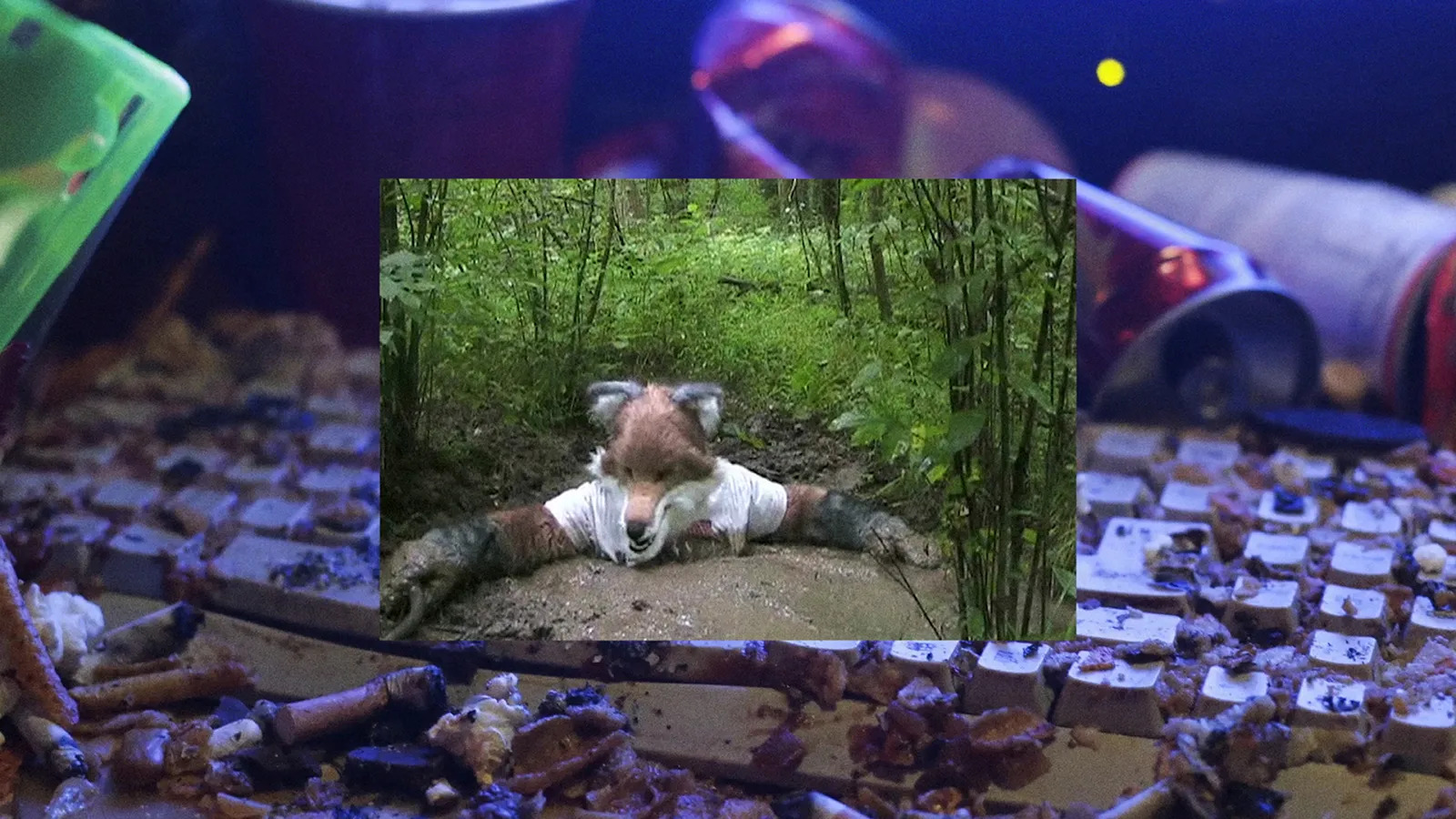
Jon Rafman, Still Life (Betamale), 2013
Generative AI opens up great new possibilities for freakshows, Leonard and Rafman shifting virtually their entire practices towards use of the technology. I want to specify that in an arts context, a real understanding, let alone critique of generative AI, needs to go much farther than the violation of artists’ intellectual property rights in the training of models. Generative AI models are algorithms that can produce the statistical mean of images as data. The product of a machine algorithm, including artwork based on existing images or literal appropriations of, have long existed in art. Something being art does not require it to be made by a human, to be original, to be unstolen, or to have value. The issue with generative AI is not theft, but its function as an exaggerated tool of cultural gentrification.
In Mean Images, Hito Steyerl contextualizes generative tools like stable diffusion within the eugenist history of statistics, Steyerl compares the results of a facial recognition recognition database focused on increasing accuracy in identifying racial minorities, these ghostly aggregates of racialised phenotypes, as parallel to Francis Guston’s photographic composites of Jewish and “criminal” faces in the 1880s. Generative tools (Pepper’s Ghosts) approximate images “through a filter of average internet garbage... remov[ing] the noise of reality from... photos and extract[ing] the social signal instead”. Generative images are not results of human engagement with our relation to images or the cultural burdens behind depiction, but instead through data analysis provides pure, unadulterated biased cultural psychosis. Short of a communist revolution and creation of a utopian society that completely eliminates the burdens of our colonial history in favor of a technologically driven garden of Eden, it is impossible for generated images to be non-eugenist. The structure of the industry will remain intact even if training models become more diverse in the name of eliminating bias, in actuality a cover for the optimization of discrimination (in assisting facial recognition software to more accurately target racial minorities) and sanitize the discrimination of these models for Western liberal markets.
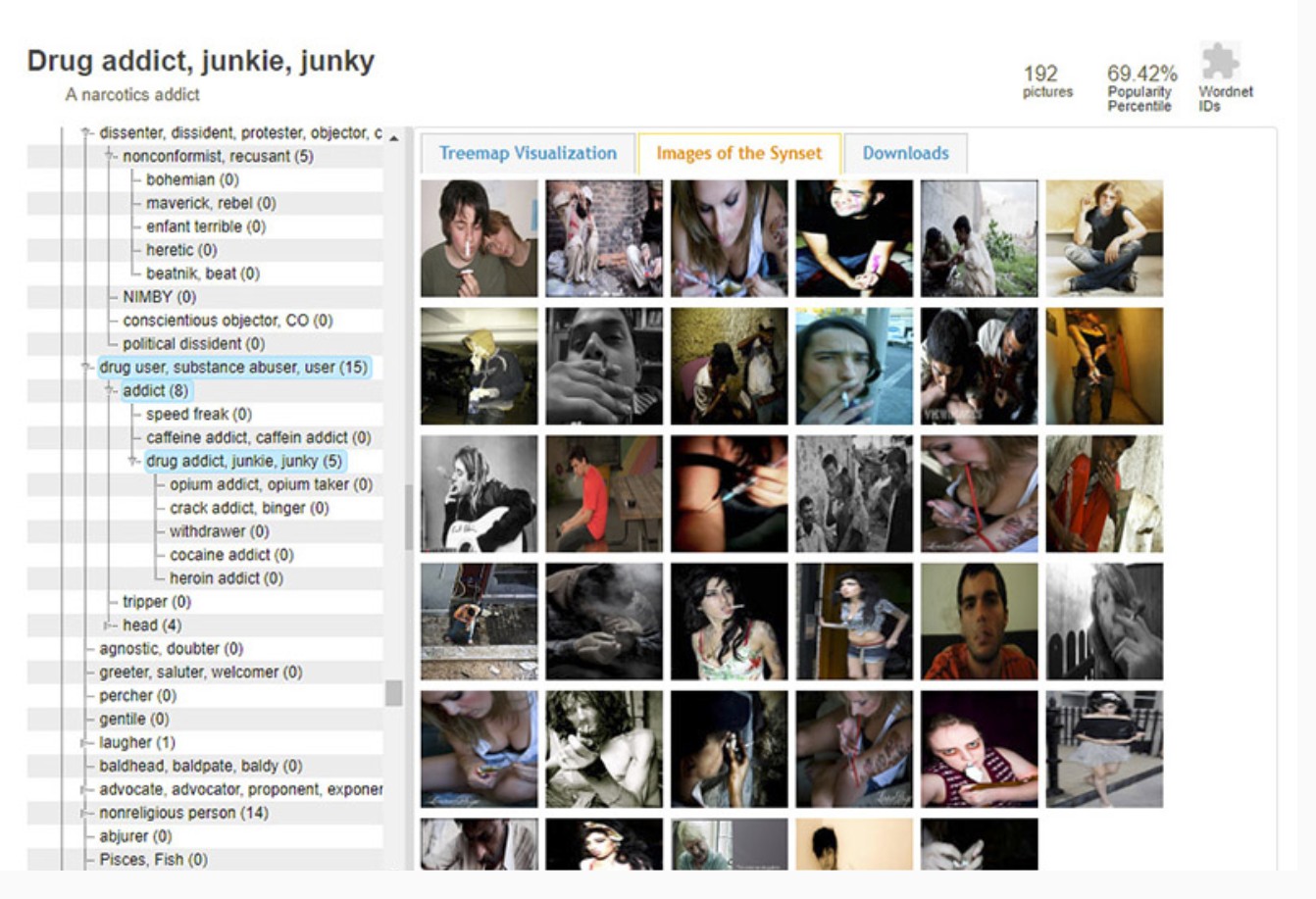
Selection from Person classes on ImageNet, an early and influential training set developed at Princeston and Stanford in 2009.
This inherent bias is both one of the critical shortcomings and alleged potentials of generative art in contemporary art contexts; the argument for the poignancy of work by Jenson Leonard and Jon Rafman being that this is merely how our culture actually sees these things. The racism and bigotry, the caricature of generated images, is the raw material of the medium for such artists. On the other side of the showmen/freak relationship, the psyches of internet subcultures have grown to be defined by its own spectacle. Many furries of a younger generation initially encounter the community through cringe culture content, in turn defining their perspective as to the acceptable and shameful limits of the community when they become a part of it. The freakshow has infected the perspectives of both artist and subject as cringe culture and moralism becomes the training data of the communities said culture is targeting, of cultural outsiders.
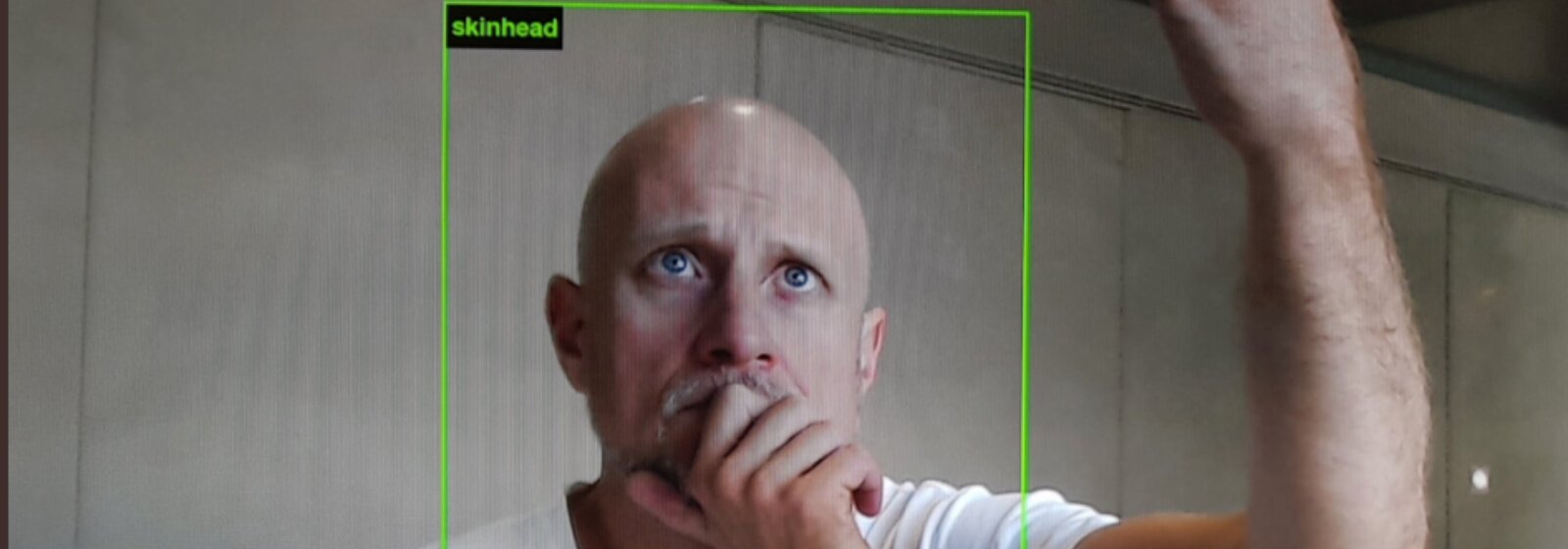
Trevor Paglen, ImageNet Roulette, 2019
What cannot be avoided when trying to take generative art seriously as an interesting medium for cultural commentary is the fact that it is a military technology nichely advertised as a creative one. The generative ai industry is a war economy, and the use of models is an active contribution and retraining of technologies currently executing genocide in places like Palestine. (I highly recommend reading Mean Images and We Didn’t Start the Fire: Physical and Digital Pipelines by Hito Steyerl for more specific examples of AI models’ need for power and labor contributing to exploitation of these regions.) What can actually be gleaned from generative ai today, in its control and mannered, 5 fingered hands is shallow and predictable, and needing to become a subsidiary of Palantir in order to create such hollow art makes it egregious to try and see optimism in.
What does it mean to make work about internet culture with war technology? What is there to be gleaned from the degenerate internet into the genetically superior artistic context? Broadly speaking towards those who engage with contemporary art or furry culture, we already understand we are postmodern, we understand the absurdity and ever increasing cultural ouroboros of where humor and shame lies in our visual culture, so what are we gleaning through further “internet culture” spectacle? What does a generated image of Ronald Reagan as Michael Jordan say about culture that that of Madea in Halo did not? What Jenson Leonard and Jon Rafman point to in their generative images is the range of eugenist slop gleamable from a couple minutes on any algorithmic social media feed. The narratives of these images range from shallow irony to generic nonsense, seeming decontextualized from any intention by the artist. The images are ghosts of memes, television broadcasts, self help tapes, podcasts, scammers, video games; abstracted versions of the most abstract, unreal media in circulation, a pointing from nothing towards nothing. To engage with generative images as an understanding of our postmodern, schizophrenic, detached visual culture is to cut oneself off from any part of said culture that arises from the human condition.
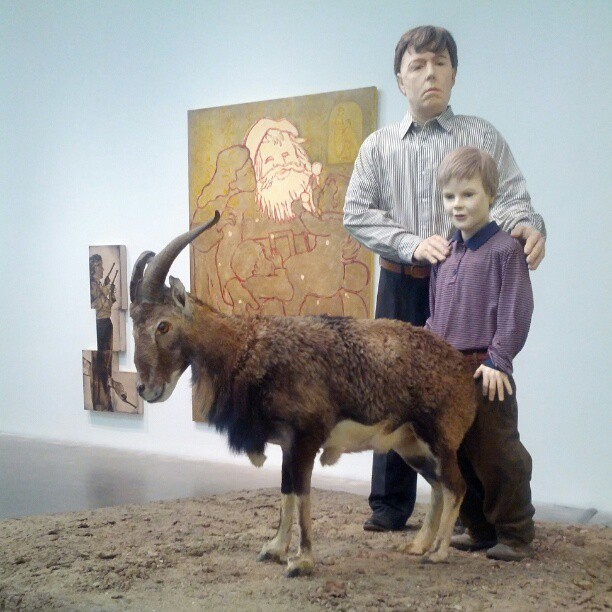
Paul McCarthy, Cultural Gothic, 1992
As a small example, other artists that use the uncanny, such as Paul McCarthy, reveal these same ideological underpinnings of our visual culture in a way that directly connects the human viewer. McCarthy’s deranged, averaged and again exaggerated reflections of good society connect because they come from a human process--this human reference is necessary to be subverted into the uncanny, which generative art misses. In Cultural Gothic, a poor animatronic bastardization of American Gothic depicting a father teacher his son how to fuck a goat, you see that this object was pieced together by human hands, it is a physical object in the room with you, there is a human witnessing the result of a much more palpably human-handed transmogrification.
At his most grotesque, Rafman yearns for these unsettlements of our human and polite sensibilities but jumps over this human tension into a sea white noise by choice of medium. Generative AI can create images that disturb, but the inherent absence of human involvement means it is a different kind of spectacle, one that has no relation to the human condition. You are not experiencing dislocation from the human or the acceptable, but a car crash of pixels and data, images jingle the shapes and colors of gore at you like keys in desperate uselessness. If Paul McCarthy’s Inside Out Olive Oil were made in this new trendy mode of spectacle production, it would be closer to Rafman's Counterfeit-Poast, still blobs of phantom gore half realizing itself around compositions of AI generated sets. There is no reflection of the body to inspire much reaction at all in these images, there is no reminiscence of bodily fluids or cycles of entrapment, but defecations of data that raise much more questions about what these alogirithms are seeing over what they are producing.
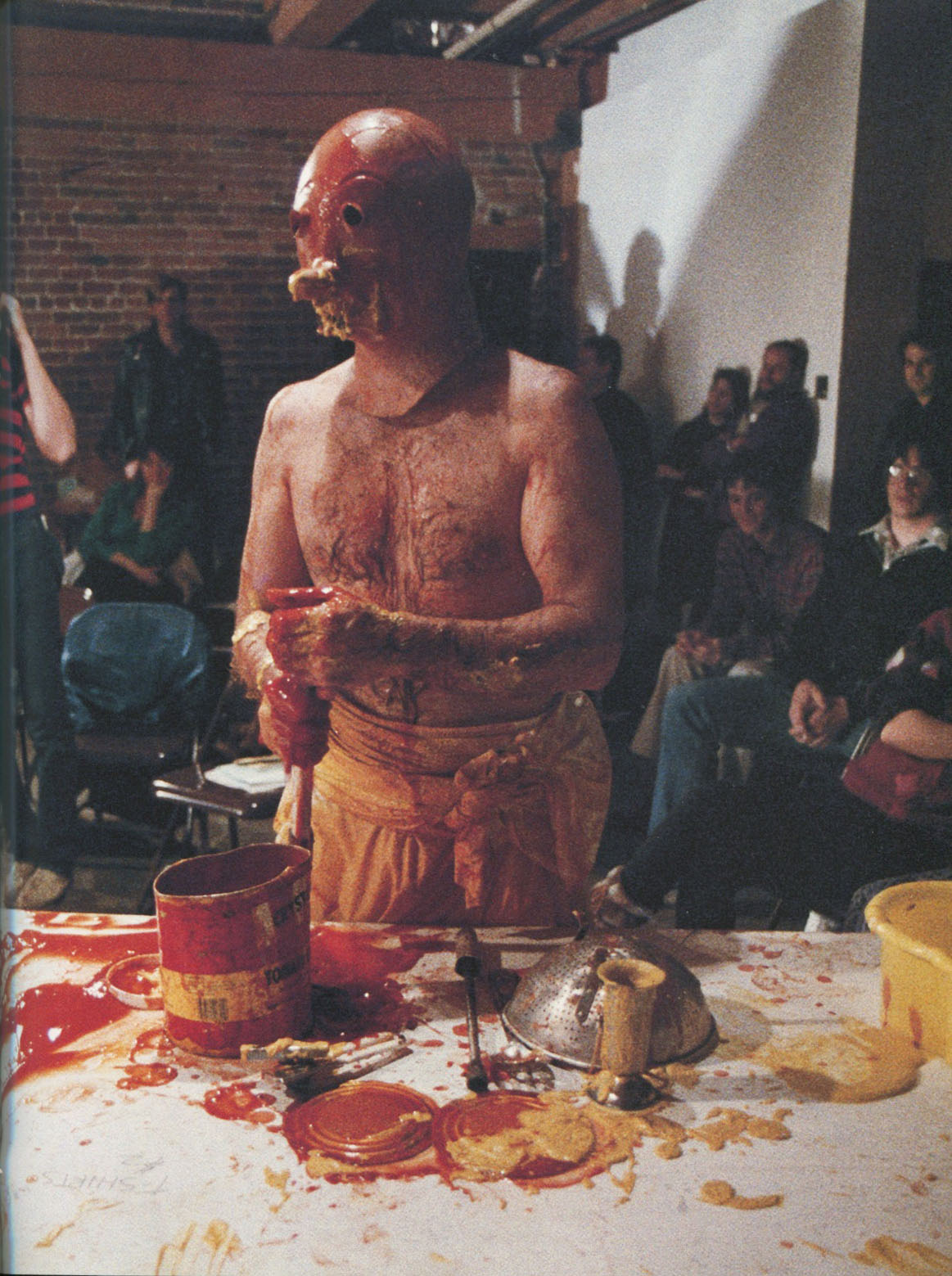
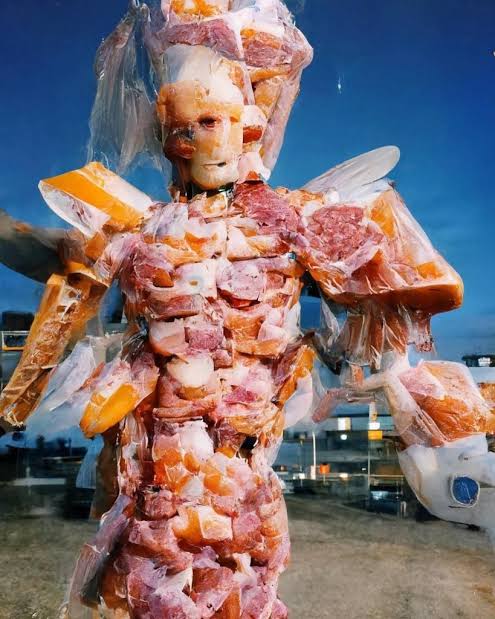
Paul McCarthy, Inside Out Olive Oil, 1983 and Jon Rafman, Counterfeit-Poast, 2022
In this sense, I do not believe that artists that make work about provocative subcultures through generative ai understand where their subversion is materializing. What is poignant in these images is not their content, as in the literal signs prompted as traces of cultures that exist by the result of human effort, but the hysterical vomit of data that creates them, the shared ringleader position between model and prompter. The images themselves are not shocking, the malevolence of the systems that generate these images, algorithmically and culturally, and the artist that continually presses the button to spit out iteration after iteration are the real spectacle. Rafman and Leonard truly do make work within “internet culture”, as the culture most present in the work is the one that produced these frames of reference, nihilistic white nationalist young male provocateurs--cultural descendents of 4chan and associated platforms, the same group that has long been the backbone of freakshow culture online and through the popular language of memes long before its infection of the contemporary art market. Generative AI can only ever speak to the ideology of the algorithm and prompters’ complacency with societal hierarchy. Generative art works in the medium of caricature from the perspective of western cultural means, it is a branch military technology powering multiple current genocides designed for minstrel art.
As generative AI can be seen as a superpowered gentrification machine, it must be acknowledged how the furry community has been internalizing this process, shaving off its own harsh data edges to go down the hatch of machine learning algorithms more smoothly. How ironic that the members of these online subcultures that advocate for the restriction of immoral fetish and imagery, those that advocate for social acceptability, are reinforcing the average, generative image that is the raw material for spectacle making. There is nothing about Leonard’s art that necessarily believes this is actually what the furry community looks like, as all his art refers to psychotic meme culture more than any physically lived reality. Is it not instead the desire for morally acceptable images within the furry community today that is actually degrading the subculture into a flat, meanspirited parody of itself? Take the intense recursive discourse online about kink and roleplay in furry spaces. Someone who can understand the gap between fantasy and material desire to the point where they do not feel implicated in beastiality via attraction to animal imagery yet cannot feel the same way about ABDL content, to the degree where it becomes an evil that needs to be cast out of the community, is someone whose desire for broad cultural acceptance exceeds a personal ideology on the relation between image and identity--the foundation of furry and fetish culture.
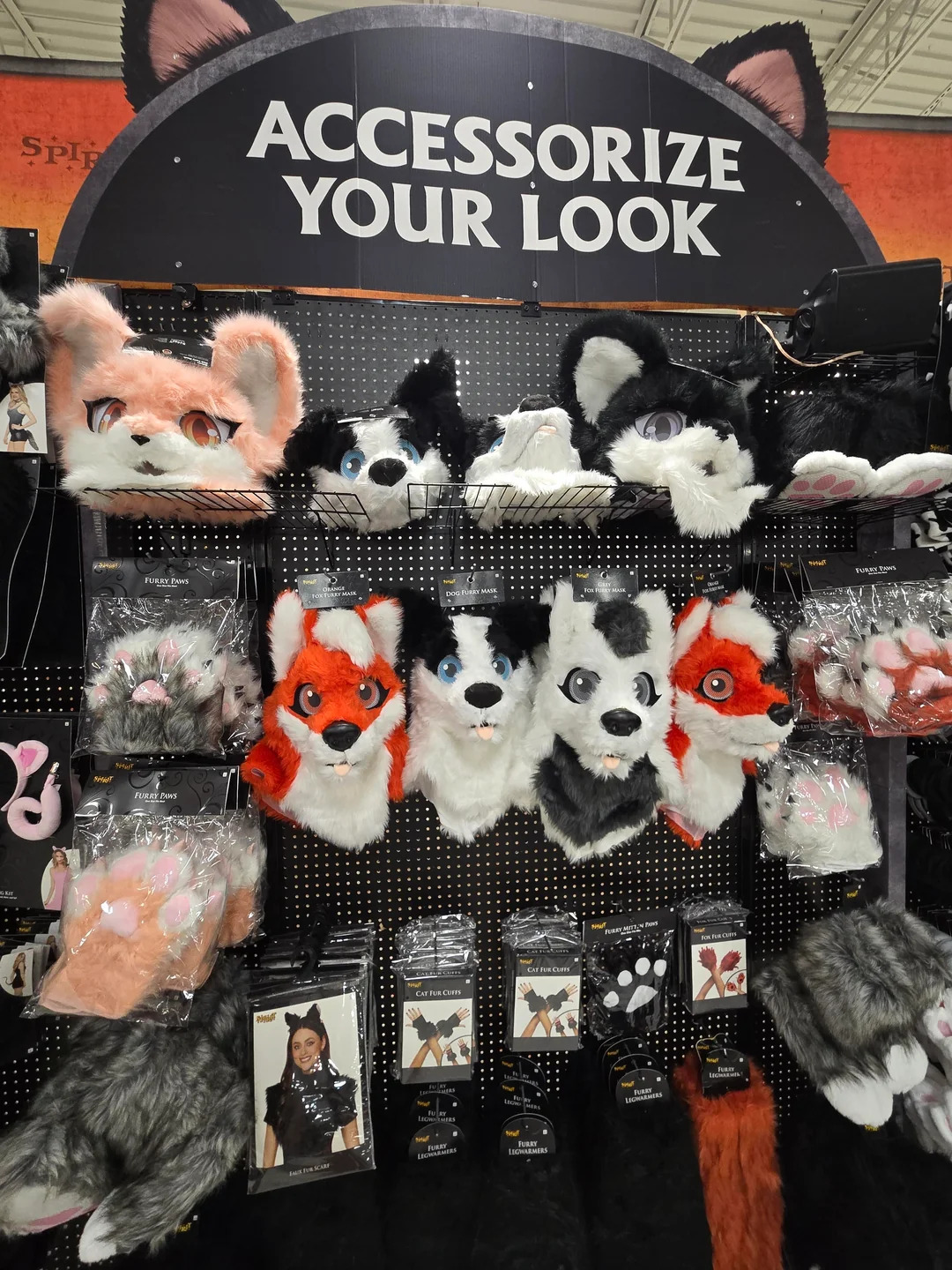
2025 photo at Spirit Halloween by pippysfleas
Perhaps Fur-ri is so disturbing because it actually is a portrait of the furry community, or what it could/is becoming under increasing commodification. This is the generated furry, inoffensive, a spectacle of curiosity, a freak on display for the hypothetical general audience who has no horniness, no fetish, for whom nothing about their identity engages with the dynamic of animal and human, who is well mannered and moral and buttoned up inside of their animal costume, scrubbed of any potentially inappropriate features. This is someone who lives and breathes cultural homogeneity who has expanded their bubble to include furry costumes, but nothing with any moral ambiguity. To make a boring comparison, the homosexual who desires to marry another man in a two story suburban house so they can judge degeneracy from inside the club. This bigoted sanding of culture that is made so literally apparent by generative AI has long existed within subcultures as the movement towards moral images and acceptance by the general public. The moral subculture is the generated subculture is the Spirit Halloween subculture.